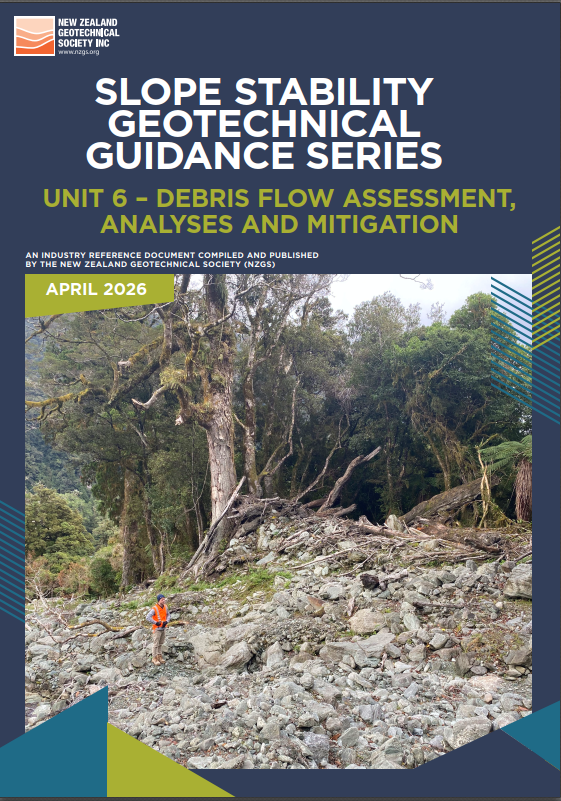

Debris Flow Assessment, Analyses and Mitigation
New Zealand is highly vulnerable to natural hazard risks, as evidenced by earthquakes and storm events over recent decades. Landslides form a significant part of the natural hazard spectrum in New Zealand and are more common here than many countries because of our terrain and unstable geology. As a society, and as the need of space for residential development in urban areas becomes critical, we are pushing subdivisions and development increasingly into areas that have significant landslide or slope instability potential. Together with the effects of climate change, our future risks from landsliding and slope instability are likely to increase considerably.
In 2022 the New Zealand Geotechnical Society started development of a series of Slope Stability Guidance documents for use in New Zealand. Unit 6 is focused on Debris Flows. These events are prevalent in regions characterised by steep terrain and periodic episodes of intense or sustained rainfall. Due to their high velocities, substantial impact forces, extended travel distances, and unpredictable occurrence, debris flows represent one of the most hazardous forms of landslides.
Unit 6 provides an overview of recommended practices in geotechnical engineering, emphasising applicability to New Zealand’s unique environmental conditions, regulatory framework, and recognised methodologies for evaluating debris flow hazards. Its primary objective is to furnish technical and practical advice for geoprofessionals—including engineers, engineering geologists, and hydrogeologists—and others engaged in the assessment and management of debris flow risks within the New Zealand context. The guidance aims to ensure that evaluations are conducted competently, consistent with established practices and contemporary technical knowledge.
Authors
Richard Justice – ENGEO, NZGS
Flow Buech
Contributions from
Tim McMorran – WSP
Willy Marshall – Aurecon