
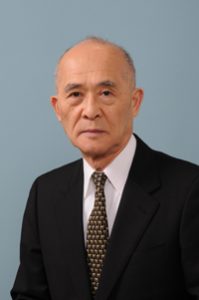
Professor Kenji Ishihara, Emeritus Professor at the University of Tokyo and one of the world’s foremost authorities in geotechnical engineering, passed away on December 26, 2025, in Tokyo, Japan, at the age of 91. His passing marks the end of an era in earthquake geotechnical engineering—a discipline he helped to found and shape over more than six decades.
Just days before his death, on December 15, 2025, Professor Ishihara was awarded the International Lifetime Achievement Medal by the International Society for Soil Mechanics and Geotechnical Engineering (ISSMGE), in recognition of his
extraordinary and enduring contributions to the profession.
Born in Chiba, Japan, in 1934, Professor Ishihara earned his bachelor’s degree in civil engineering from the University of Tokyo in 1957, followed by a Master of Engineering in 1959 and a PhD in 1963. He began his academic career at the University of Tokyo in 1963 and, after working for four years as a lecturer, spent a formative year as a Visiting Research Associate at the University of Illinois at Urbana–Champaign under the mentorship of the late Professor Ralph B. Peck. He returned to the University of Tokyo as an associate professor and was appointed Full Professor of Civil Engineering in 1977. He served as Chair of the Civil Engineering Department from 1980 to 1982 and retired from the University of Tokyo in 1995.
Following his retirement, Professor Ishihara continued his academic service as Professor of Geotechnical Engineering at the Tokyo University of Science (1995–2001) and later at Chuo University (2001–2025), remaining actively engaged in academic activities until the end of his life.
Professor Ishihara’s long and illustrious association with ISSMGE began in 1970 when he was appointed as Secretary of the Japanese National Committee. In 1985, together with Professors Izzat Idriss and Liam Finn, he established within ISSMFE the Technical Committee 4 (now TC203) on Earthquake Geotechnical Engineering and was its founding Chair from 1985 to 1993. Professor Ishihara served as Vice-President of the Asian region of the ISSMFE from 1989 to 1993, and his work with ISSMGE with his appointment as the President of the International Society of Soil Mechanics and Foundation
Engineering, for the term 1997 to 2001.
Widely regarded as one of the founding and leading figures of earthquake geotechnical engineering, Professor Ishihara made pioneering contributions to the understanding of cyclic soil behavior, soil liquefaction, and the seismic stability of slopes, foundations, and earth structures. His work fundamentally shaped modern engineering practice and remains central to contemporary research. He authored more than 300 scientific papers, many of which continue to be regarded as essential reading. His seminal book, Soil Behaviour in Earthquake Geotechnics (Oxford University Press), provides an in-depth and comprehensive presentation of some of his work and stands as a definitive reference in the field.
Professor Ishihara’s research was deeply grounded in field evidence on the effects of strong earthquakes and observations from geotechnical case histories. He conducted post-earthquake investigations following major seismic events worldwide, including those in Romania (1977), Yugoslavia (1979), Chile (1985), Mexico (1985), Ecuador (1986), Armenia (1988), Tajikistan (1989), the Philippines (1991), Iran (1991), and numerous earthquakes in Japan.
Through this work, he identified critical mechanisms of soil behavior under seismic loading and developed practical methodologies that profoundly influenced engineering design and hazard mitigation.
From the early 1980’s Professor Ishihara became an internationally renowned authority in the discipline and served on various occasions as consultant or adviser to UNESCO projects in the Balkan region and India, and in UNDP projects in Chile, India and Iran. He provided advice and guidance on major engineering projects in Japan and internationally throughout his career, and following his retirement from the University of Tokyo in 1995, was an Adviser to Kiso-Jiban Consultants, one of the leading consulting companies in Japan.
Throughout his career, Professor Ishihara received numerous prestigious honors, including the Rankine Lecture (1993), Terzaghi Oration (1997), H.B. Seed Medal (1998), and Peter Lumb Lecture (2002). He received the Japan Academy Prize in 2000, the Distinguished Accomplishment Award of the Japanese Society of Civil Engineers in 2005, was elected a Foreign Member of the U.S. National Academy of Engineering in 1990, and was awarded the Order of the Sacred Treasure, Gold Rays with Neck Ribbon, by the Emperor of Japan in Honorary doctorates were conferred upon him by the Technical University of
Bucharest and Istanbul Technical University.
Professor Ishihara has advised generations of graduate students many of whom became leading academics and professionals around the world. Throughout his academic career, he as particularly keen on interacting with and encouraging young geotechnical engineers during conferences and other meetings he attended. Beyond his extraordinary academic
credentials, Professor Ishihara was a mentor cherished for his tremendous humility, technical and life wisdom, passion for teaching, and unwavering commitment to applying science to engineering practice. For colleagues and former students, his legacy lives not only in his papers, books and lectures, but also in the careers he shaped and lives he touched through his
dedication, passion and vision.
Professor Ishihara is survived by his wife, Miyoko, his three daughters, and his grandchildren. A private funeral ceremony was held by his family. His passing was publicly announced on January 4, 2026.
His influence will endure through his teachings, his seminal contributions to engineering science, and the global community he helped build.